
Bel Air South City Directory Holdings
Bel Air South never issued its own directory. The community is a census-designated place rather than an incorporated town. So no continuous municipal volume exists. The useful city-directory shelf is therefore regional and county based. One digitized run stands out. The Library of Congress holds the Harford County White and Yellow Pages. It covers September 1960 through September 1962. A locality index inside lists Bel Air. Remember that it is a telephone directory, though. It is not a roster of every Bel Air South household.
Later regional volumes and local reference collections extend the search in separate pieces. Log the volume date and section heading with each entry. A similar name in a different locality can otherwise point to the wrong household.
| Located collection | Dates found | Access point | Research use |
|---|---|---|---|
| Harford County White and Yellow Pages | September 1960 to September 1962 | Library of Congress digital item and reel | Subscriber or business name, telephone number, locality or address line |
| Baltimore Suburban West White and Yellow Pages | December 1963 | Library of Congress digital item | Regional bridge with Bel Air in the locality index |
| Maryland and Baltimore White Pages resource | December 1964 locality index | Library of Congress digital resource | Another dated telephone-directory snapshot |
| Polk's Bel Air catalog lead | Exact years not located in official sources | FamilySearch catalog and Bel Air affiliate access | Potential name, address, and household tracing |
| Maryland Room and Historical Society files | Runs vary by item | Bel Air Branch and HSHC | Reference works, microfilm, vertical files, maps, obituaries, and local context |
These holdings are not a Polk series. Gaps are normal. Ask the custodians about duplicate volumes, reverse or criss-cross books, yearbooks, telephone books, and funeral-home or obituary files instead of assuming what fills a gap.
Bel Air South Maryland Room Access
Bel Air South researchers can use the Bel Air Branch as the local affiliate and reference-room route for collection material.
For Bel Air South, the Maryland Room is the practical place to ask about reference-only books, microfilm, and restricted FamilySearch images.
The Bel Air Branch Maryland Room, on the second floor, is the local starting point for a historical-directory question. Its listed services include the Maryland Collection, Oral History Collection, microfilm and microfiche readers, public computers, and FamilySearch affiliate access. The library describes its genealogy collection as a major Maryland and local reference collection, and many materials are reference-only. That makes an in-library visit important when an online catalog result does not expose a scan or a date range.
The source page for the Harford County Public Library local-history resources also points to the Harford Heritage Digital Archives, the Harford Historical Bulletin subject index, the Happy Map-Maker land-grant project, oral histories, and subscription genealogy resources with branch-access limits. Its Living Treasures collection has more than 300 interviews. A directory line that supplies only a surname and address can become far more useful when paired with an oral history, a local paper, or a map.
The library's local-history page shows the online doorway to these Bel Air South collection companions.
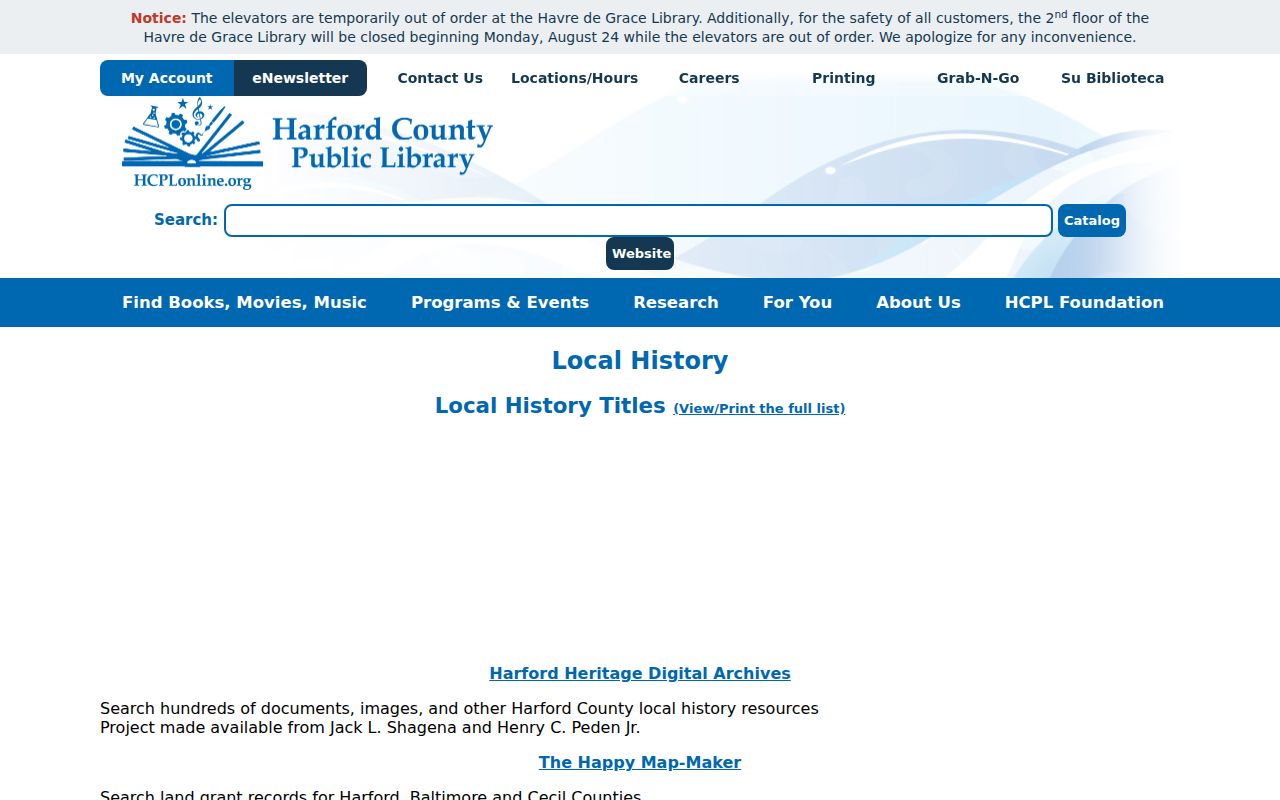
Local-history access like this pays off when a telephone listing needs a newspaper, map, or oral-history companion. Then it can be tied to the right family.
Bel Air South Telephone Directory Years
The digitized phone books form a tight sequence. They cover selected subscribers, not every Bel Air South household. The clearest run sits at the Library of Congress. The Harford County White and Yellow Pages item covers September 1960 through September 1962 and holds 600 images.
December 1963 appears in the Baltimore Suburban West volume, and a December 1964 locality index sits in another Maryland and Baltimore resource. Search the locality index first. Then preserve the exact volume, page, or image reference with anything you copy. These books list subscribers and businesses. They do not name everyone who lived in a home.
Older questions reach past the phone-book window. The Maryland State Archives describes the Bel Air Times microfilm collection. The paper ran weekly from 1881 to 1941. Reported holdings include 1884 to 1887 and 1898 to 1941, with local gaps. Death notices, marriage announcements, civic notices, advertisements, and addresses can bridge the years before the telephone directories, but they are dated evidence, not a substitute for a current directory.
The Bel Air Branch page shows Maryland Room access.
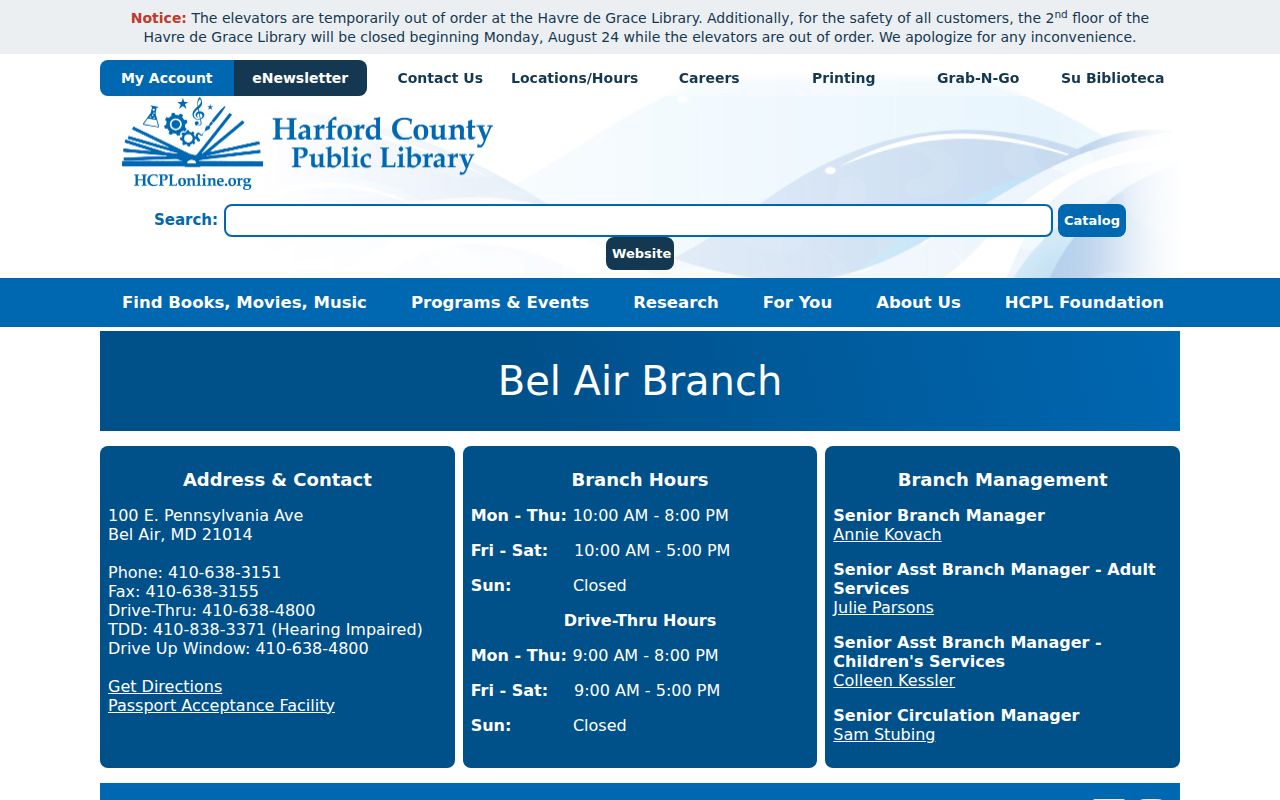
The Maryland Room gives the practical in-person route when a published year, a microfilm issue, or a companion newspaper page is not available from home. Some records never leave the building. That trip is often worth it.
Note: A telephone subscriber line may omit unlisted households, children, and people who lack telephone service.
Bel Air South Historical Society Files
The Historical Society of Harford County opens a second path. That path runs straight into Bel Air South residents directory research. Its online-research page lays out appointment-based services and the society's local collections. The society sits at 143 North Main Street in Bel Air. It keeps surname materials, vertical files, maps, marriage records, tax valuations, and obituaries. Hours and research arrangements change, so confirm them before visiting.
Start with the searchable HSHC PastPerfect catalog. It offers both a Keyword Search and an Advanced Search. Labels cover the Master Family Index and the Peden Special Genealogy Collection. Further labels list surname files, a map index, and marriage records. Original tax valuations for 1896 and 1902 also appear. Obituaries begin in September 2007. Indexing is a work in progress. A no-result screen has a plain meaning. The item may simply wait for cataloging. It does not mean the society lacks the family or place. A Bel Air South resident lookup with no hit there is far from finished.
For surname and map questions, the society's appointment channel narrows things further. Keep the exact surname, street, date, and item type in hand. Do this whenever a staff research request is needed. HSHC's online-research service explains that collection-and-appointment route in detail. The more precise the request, the more useful the reply tends to be.
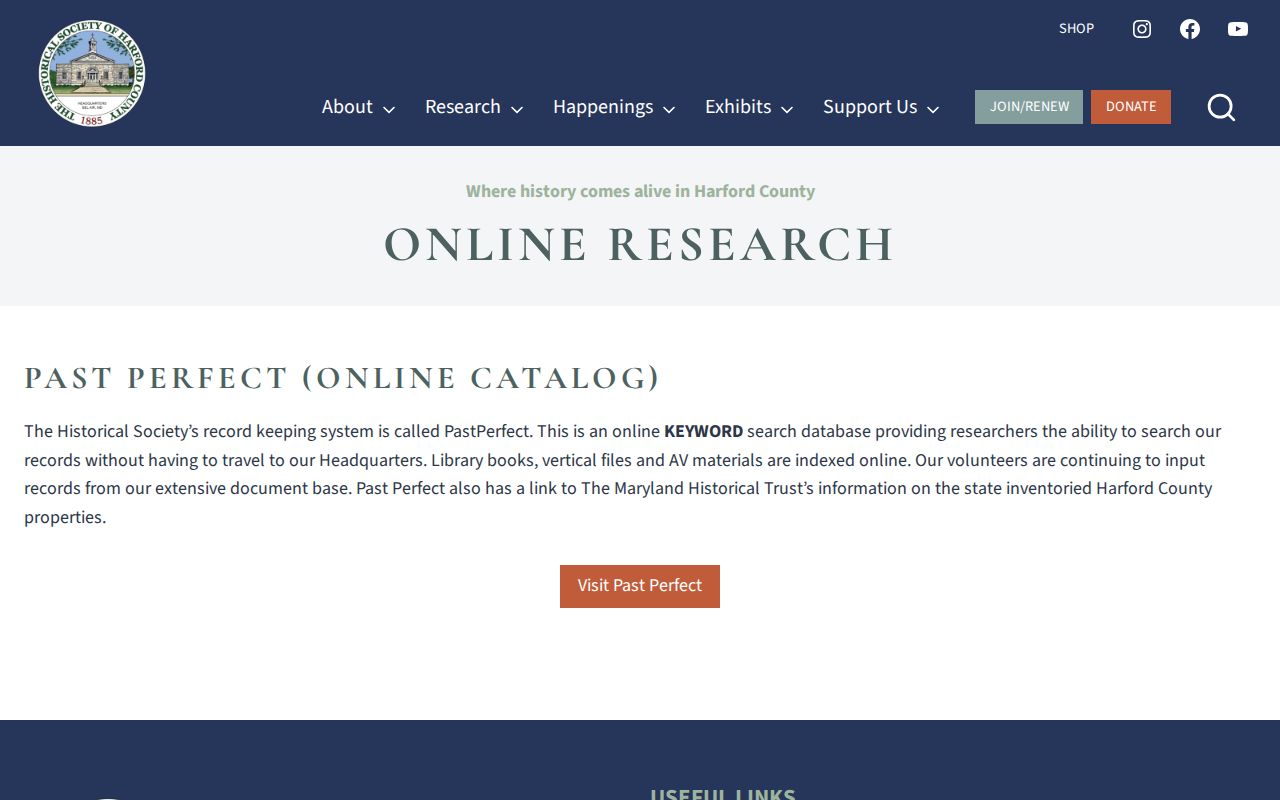
Use the appointment channel to request a targeted surname, street, map, or directory check, and tie the question to a documented year or address. A vague inquiry slows the search.
Read Bel Air South City Directory Entries
A printed Bel Air South directory entry must be read by its volume. Each book did its own printing. In the Library of Congress telephone material, the dependable fields are an alphabetic subscriber or business name, a telephone number, and a locality, street, or business-address line. The volumes publish no stable individual Bel Air line. The fields below are an inventory of what the scans support rather than a sample entry.
Yellow Pages listings can add a business classification and sometimes a display advertisement. A White Pages line may name a household surname or business rather than every person at the address. Read each line for what that volume printed, nothing more. Any Bel Air South directory transcription should retain the source volume, locality, and page or image. Keep the exact printed spelling too.
| Subscriber or business name | The printed alphabetic name used for the listing, which may be a household surname or a business. |
|---|---|
| Telephone number | The historical number printed for that dated volume, not a current contact detail. |
| Locality or address line | The street, locality, or business-address information printed with the listing. |
| Section heading | White Pages or Yellow Pages context, plus a business classification where one is printed. |
| Volume evidence | The directory year, image or page, and locality index needed to reproduce the finding. |
- Criss-cross directory
- A reverse directory arranged by street or address rather than surname. No exact Harford run was verified online, so ask the Maryland Room or HSHC for one.
- Householder index
- An index that organizes a volume around the named household or address. It may omit other people in the home.
- Abbreviation key
- The printed explanation of shortened terms or symbols in a volume. Photograph it with the entry before interpreting a mark.
Keep the language historical. An old address or number establishes what that volume printed, not a present residence or current contact.
Bel Air South Polk Catalog Lead
FamilySearch lists a catalog title for Polk's Bel Air (Harford County, Md.) directory. The entry shows no publisher dates and no online image run. Treat the Bel Air South Polk lead as a catalog finding, not proof of a published year range or a digitized collection. Search the FamilySearch catalog with Place = Bel Air, Maryland, and with the Polk title or keyword. Then inspect results through the Bel Air affiliate or the FamilySearch Library.
The difference matters. The Library of Congress records prove several dated telephone-directory snapshots. The catalog may point to a traditional volume. Its name and address fields could differ. Do not merge the two. One claimed collection would misstate both. The right question for HCPL and HSHC is whether either holds a particular Polk volume. It might be a duplicate or address-ordered companion. The HSHC PastPerfect catalog offers another quick test for a surname, map, marriage, or vertical-file lead before research help is arranged.
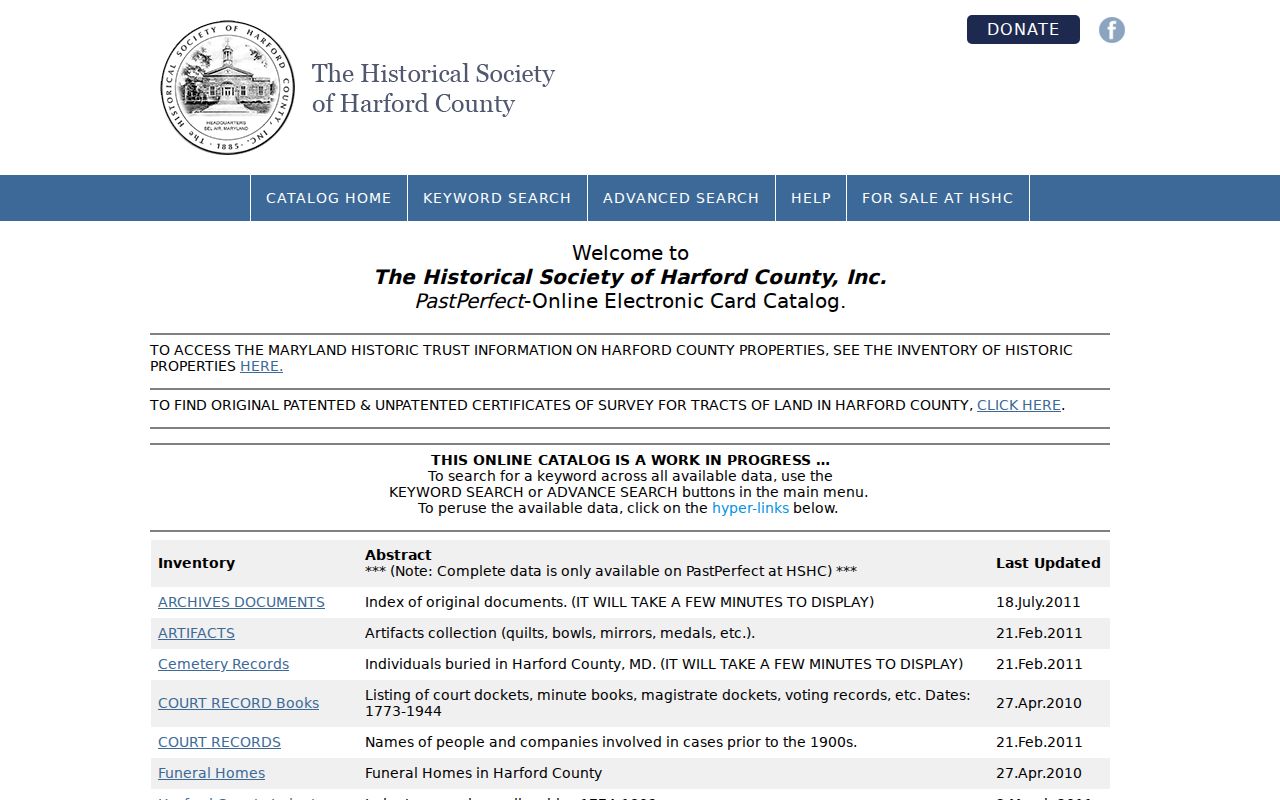
The catalog supports a focused request, but its work-in-progress notice leaves the collection itself as the final check.
Bel Air South Directory Source Timeline
Harford's record history explains why a Bel Air South street directory search needs several shelves. A courthouse fire in 1858 destroyed important administrative material. Land-record series beginning in 1773, though, survived. A missing early administrative reference is therefore a reason to try deed books, archives, newspapers, church records, and tax series. It is not proof that no person or property record ever existed. The telephone books arrive much later and cover only selected subscribers. Bel Air South historical gaps are best described by the missing collection and year. Never assume an entire record trail vanished. Land records, newspaper notices, telephone books, and local collection files form separate archival layers.
- 1773: Harford County land-record coverage begins, according to the Clerk's stated record span.
- 1858: The Harford courthouse and main building were destroyed by fire, with losses in some administrative records.
- 1881 to 1941: Bel Air Times supplies a weekly newspaper layer, with reported archive holdings that include gaps.
- 1960 to 1964: The located Library of Congress telephone-directory resources provide dated subscriber snapshots.
- Today: Maryland Room, HSHC, archives, and affiliate access supply the follow-up paths for uncataloged or restricted historical material.
That contrast, surviving land chains against lost administrative records, is the local research puzzle. It also blocks the misleading claim that every earlier household sits in one historical directory.
Trace Bel Air South City Directory Households
Trace a household through dated volumes one step at a time. Start with one volume that brackets a known address or name. Transcribe the surname exactly, initials and spelling included. Then note the telephone number, locality line, section, volume date, and page or image. Search the preceding and following material for the same address and surname.
A move can guide the next search. So can a changed business listing, a widow notation, or a missing listing. None of them proves a move or a death by itself. Bel Air South household tracing works best when each directory line is paired with another dated source. The line should not be treated as present proof. Names and addresses stay tied to the dated volume. A modern parcel record can still offer a useful comparison.
- Locate the earliest dated telephone or city-directory entry that fits the known name or address.
- Record all printed fields and the directory's volume evidence before comparing another year.
- Search the nearby dated volumes, then ask for an unverified reverse or criss-cross directory by its street-order terms.
- Pair the dated entry with the 1960 census, the 1950 census or earlier released schedules, a deed or assessment address, and a local newspaper notice.
- Use HSHC obituary, probate, map, or surname files to test whether a disappearance reflects a move, a death, or incomplete directory coverage.
A dated city directory entry and a modern parcel record answer different questions. Keep the two time frames apart and the history stays honest. Printed directories captured households as they stood in a given year. Names, occupations, and street listings shifted from edition to edition. Today's addresses live elsewhere. For current ownership and mapping, the deed trail and assessor records fill that role. The Bel Air South street directory carries the present-day street listings. Past residents emerge most clearly when each directory edition is read against its own publication year. Blending editions into one record muddies the trail.
Note: Keep the directory date, page, locality, and exact spelling with every result so the historical search can be repeated.